Forest carbon projects create a shared opportunity for corporations and forest landowners to actively protect wildlife habitat and the unique species those landscapes support. Landowners play a critical role by committing their forests to long-term sustainable management that maintains intact habitat, improves ecological conditions, and preserves biodiversity over time. Corporate carbon buyers, in turn, make this stewardship possible by investing in high-quality forest carbon credits that value ecological contribution alongside verified climate impact. Together, participation in forest carbon projects aligns market demand with on-the-ground conservation, turning climate action into lasting benefits for forests, habitat, and the species that depend on them.
Rare Species’ Decline Linked to Habitat Loss
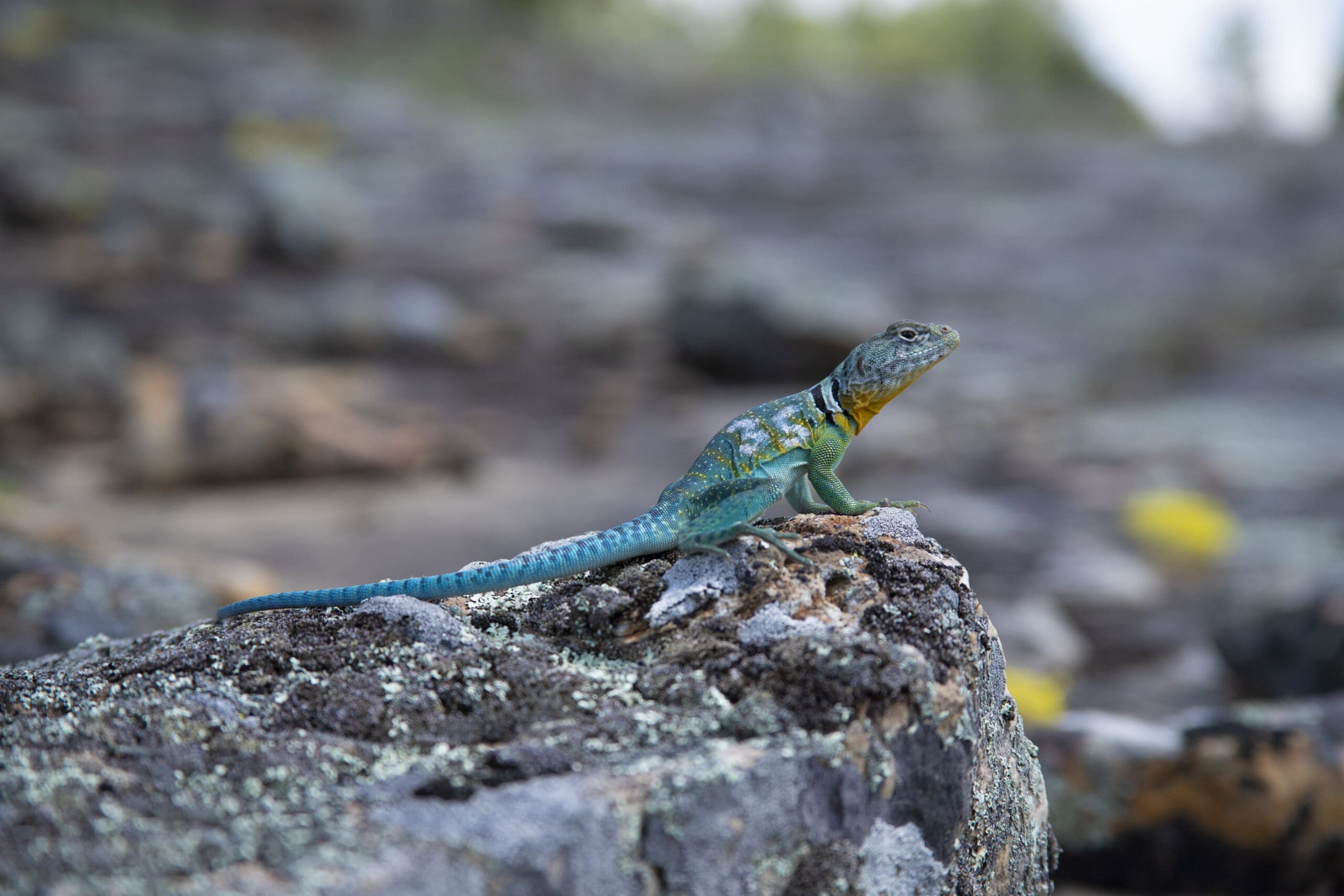
The Eastern Collared Lizard (Crotaphytus collaris), is considered a species of highest concern in Arkansas. Known locally as “mountain boomers,” it’s one of the state’s most distinctive reptiles. Brightly colored, they can be seen running on their back legs. Most importantly, they are considered an indicator species that reflect their habitat’s health and its ability to support other species that share it.
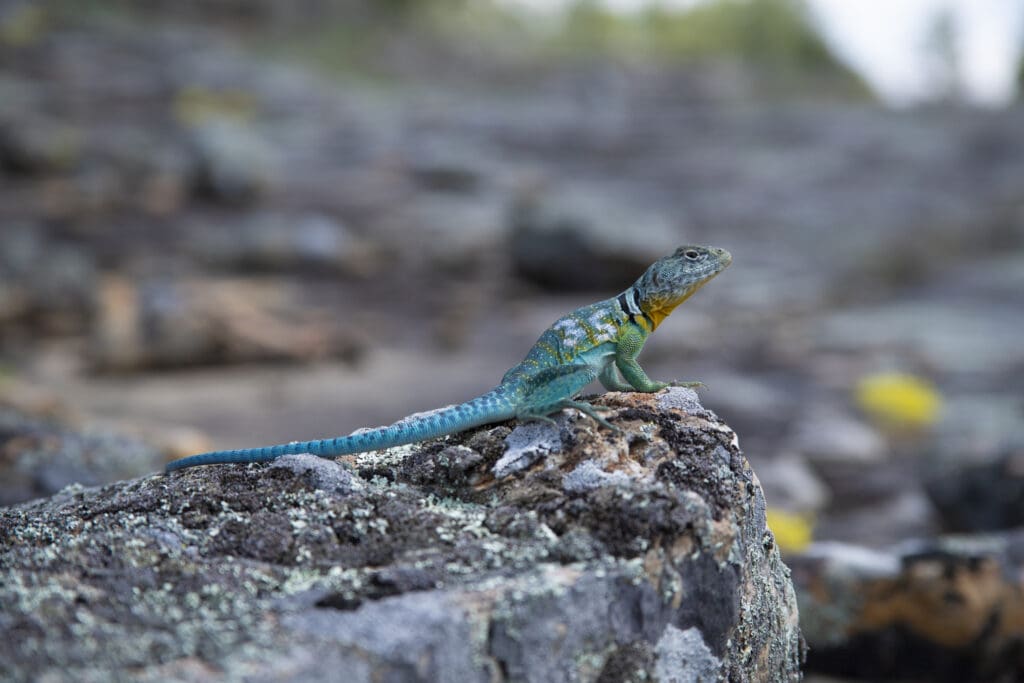
While Collared Lizards are common in the desert Southwest, populations in Arkansas occur at the eastern edge of the species’ range. Historically, Eastern Collared Lizards were widespread across the Ozark and Ouachita Mountains, residing on rocky landscapes known as glades. These glades once occurred as vast open rock faces in mountainous regions, routinely disturbed by natural wildfires. Thin soils, exposed bedrock, and intense sunlight make this habitat a harsh, but unique feature of Arkansas, creating biologically diverse systems that support many plant and animal species found nowhere else in the surrounding forest.
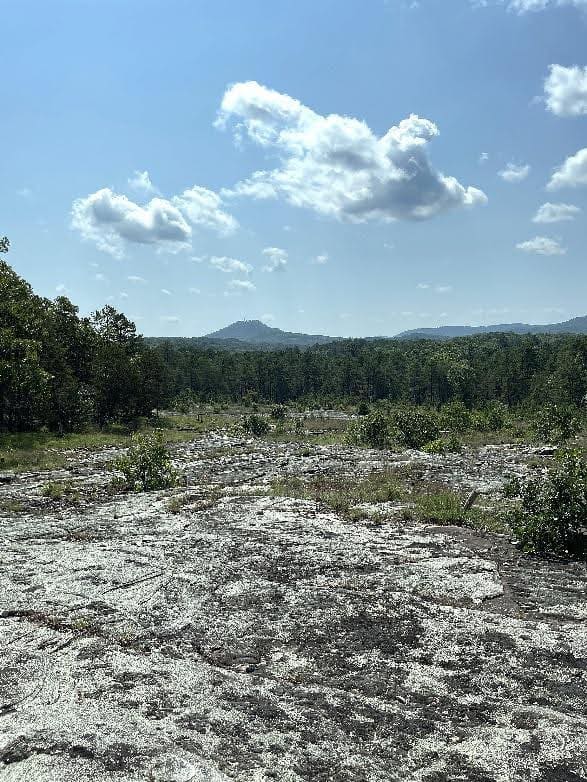
Collared Lizards are especially dependent on these conditions. They utilize exposed bedrock as territory for foraging and mating, while crevices and overhangs between rocks provide refuge for nesting sites and brumation. Most importantly, the hot, rocky environment is the perfect spot for thermoregulation, a process crucial for all reptiles. The loss and degradation of glades have led to a concerning decline in the Collared Lizard’s population.
Arkansas’s glades once experienced natural fire disturbance but decades of fire suppression have allowed eastern red cedar and other woody vegetation to invade glade habitats. As glades become shaded and overgrown, surface temperatures drop, and conditions become unsuitable. Lizards in degraded glades show slower growth rates and lower clutch size, which likely contributed to their decline over time. As a result, Collared Lizards are considered a species of greatest conservation need in Arkansas.
Today, Eastern Collared Lizards exist on only a few suitable glades in Arkansas managed by government agencies such as the Arkansas Game and Fish Commission, organizations like The Nature Conservancy, and by private landowners who recognize the importance of these habitats and the special practices it takes to manage them.
Research in Arkansas has shown that Collared Lizards respond positively to active management, and habitat structure greatly impacts their growth and development. So, although Eastern Collared Lizards have not yet been confirmed within NativState’s projects, when our foresters identify glade acres within a project, regardless of current habitat quality, they work with landowners and include intentional measures in that project’s Forest Management Plan to protect and restore that special ecosystem.
The Power of Landowners to Protect Vulnerable Species
NativState’s landowner partners play a crucial role in the future of species like the Eastern Collared Lizard by choosing to sustainably manage their land. It takes time for degraded glades to be able to once again support species like the Eastern Collared Lizard, so having a long-term management plan and enrollment in a sustainable forestry certification program, like FSC, helps landowners steward unique habitats like glades. NativState works directly with private landowners to meet their land goals, enhance the long-term health and value of their property, earn income from conserving their land while protecting habitat that benefits charismatic species like the Eastern Collared Lizard.
Read more about managing for biodiversity and find out if your land may be a good fit for one of our Forest Carbon Programs.